
Somvati Amavasya 2026: A Rare and Auspicious Occasion
In June 2026, a truly rare celestial event brings a special spiritual significance to the calendar.
The Amavasya (New Moon), which falls on Monday, June 15, 2026, is uniquely designated as Somvati Amavasya.
What makes this occurrence particularly extraordinary is that it falls during an Adhik Maas—the rare extra lunar month in the Hindu calendar.
Because the New Moon coincides with a Monday, it is considered a deeply auspicious day for prayer, meditation, and performing rituals for the well-being of ancestors.
Amavasya Tithi Timings
To ensure you observe the rituals at the correct time, please note the following transition phases of the Tithi :
Tithi Starts : June 14, 2026 (Sunday) at 12:19 PM
Tithi Ends : June 15, 2026 (Monday) at 08:23 AM
Why is this day significant?
In Vedic traditions, a Somvati Amavasya—or a New Moon that happens on a Monday—is believed to hold immense spiritual energy.
Devotees often visit holy rivers, observe fasts, and perform charity to seek blessings, peace, and prosperity.
Given that this specific event occurs during an Adhik Maas, the spiritual merit associated with performing good deeds or prayers on this day is believed to be manifold.
Somvati Amavasya: The Sacred Confluence of Silence, Ancestry, and Spiritual Renewal
In the vast, rhythmic calendar of Hindu traditions, certain days stand out as portals—moments when the veil between the material and the spiritual becomes whisper-thin.
Among these, Somvati Amavasya holds a position of profound reverence.
Falling specifically on a Monday (Somvar) that coincides with the new moon (Amavasya), this day is considered one of the most auspicious and potent occasions for spiritual cleansing, ancestral healing, and personal transformation.
To understand Somvati Amavasya is to understand the interplay of celestial bodies, the sanctity of time, and the deep-seated human need to reconnect with the roots of one’s existence.
The Cosmic Significance: Why Monday? Why the New Moon?
In Vedic astrology, the days of the week are named after celestial bodies.
Monday is governed by the Moon (Chandra). In yogic and astrological traditions, the Moon represents the human mind, emotions, and the flow of life energy (Prana).
Amavasya, the new moon, is a phase where the moon is invisible to the naked eye.
In spiritual circles, this is not a time of darkness, but a time of total internal focus.
It is the day when the influence of the sun and moon on the human psyche is at its peak.
When this day falls on a Monday—the day of the Moon—it creates a unique resonance.
It is believed that the energies of the mind and the energies of the cosmic cycle align perfectly, making it the supreme day for Sadhana (spiritual practice) and introspection.
The Cultural and Mythological Roots
The significance of Somvati Amavasya is woven into the fabric of Indian epics and Puranas.
It is famously mentioned in the Mahabharata, where the sage Bhishma explains the greatness of this day to Yudhishthira.
According to legend, performing rituals on this day can wash away the accumulated karmic baggage of lifetimes.
Traditionally, this day is also associated with the penance of women for the longevity and prosperity of their husbands.
However, in contemporary times, its meaning has expanded into a universal call for inner peace, honoring ancestors, and seeking liberation from self-imposed limitations.
The Rituals of Sanctity : How Somvati Amavasya is Observed
Observance of Somvati Amavasya is not merely about performing rituals; it is about cultivating a state of Satvik (pure) consciousness.
1. The Holy Dip (Snan)
For millions, the day begins with a dip in a holy river—the Ganges, Yamuna, or the Saraswati.
Water is considered a conductor of spiritual energy.
A dip in the early hours of the morning is believed to cleanse the subtle body, refreshing the spirit and preparing the mind for deep meditation.
2. The Pipal Tree Worship (Pipal Vrat)
The Pipal tree holds a special place in the rituals of this day.
It is said that the Trinity—Brahma, Vishnu, and Shiva—reside in the roots, trunk, and the crown of the Pipal tree, respectively.
Women traditionally circumambulate the tree 108 times, tying a sacred white thread around it.
This act of Parikrama (circumambulation) is a symbolic gesture of encircling the Divine, acknowledging that the center of one’s universe is the Almighty.
3. Ancestral Rites (Tarpan)
Amavasya is the day reserved for the Pitrus (ancestors).
It is believed that on this day, the departed souls visit the earth or are most easily reached through our prayers.
Offering Tarpan—a mixture of water, black sesame seeds, and flowers—is a way to acknowledge the lineage that gave us life.
It is an act of gratitude, ensuring that any unresolved karmic debts are settled so that the ancestors may find peace and the living may move forward without burden.
4. The Power of Silence (Maun Vrat)
Many practitioners observe Maun Vrat (a vow of silence) on Somvati Amavasya. Since the moon governs the mind, and speech is the primary output of the mind, remaining silent allows the internal chatter to subside. It is a day to listen to the "sound of silence" and align one’s inner frequency with the stillness of the moonless night.
The Psychological and Spiritual Benefits
Why do millions of people continue to observe these traditions?
Beyond the religious overlay, there is a profound psychological framework at play.
Mindfulness and Presence : The intensity of the rituals compels a person to be present.
Whether it is counting 108 rounds around a tree or focusing on the water during a bath, these actions serve as a form of "Grounding."
Release and Letting Go : The new moon is the beginning of a fresh cycle.
By offering prayers to ancestors and performing acts of charity, the practitioner is psychologically signaling a "releasing" of the past. It is an annual spring cleaning for the soul.
Harmony with Nature : In a world dominated by artificial light and digital noise, Somvati Amavasya forces a reconnection with the lunar cycle.
It reminds us that our physical bodies, our emotional states, and our thoughts are not independent of the universe; they pulsate with it.
Modern Relevance : Finding Meaning in the 21st Century
In our fast-paced, technology-driven lives, the idea of "ancestral healing" or "circumambulating a tree" might seem archaic to some. Yet, the relevance of Somvati Amavasya is perhaps greater today than ever before.
We live in an age of constant stimulation. Anxiety, stress, and the fear of missing out (FOMO) dominate our daily lives.
Somvati Amavasya offers a pre-planned sabbatical.
It invites us to slow down, to step away from the screen, and to acknowledge that we are part of a lineage that stretches back thousands of years.
How to observe it today, even if you are not near a river :
Digital Detox : Dedicate the day to minimal screen usage.
Meditation : Spend at least 30 minutes in silent meditation, focusing on your breath and your roots.
Gratitude Journaling : Write down the names of ancestors or mentors who shaped your life.
Acknowledge their contribution to your existence.
Charity : The highest form of worship is service.
Donate food, clothes, or time to those in need. It is believed that karma done on Somvati Amavasya yields returns manifold.
The Philosophical Core: The Void as a Beginning
The beauty of the Amavasya is the celebration of the void. We are conditioned to celebrate fullness—full moons, success, abundance.
But Somvati Amavasya teaches us that growth emerges from the void.
Just as the moon must disappear to begin its journey toward fullness, we too must periodically empty ourselves of our ego, our worries, and our attachments to begin anew.
The darkness of the new moon is not an end; it is a canvas upon which the next cycle of life is written.
Conclusion
Somvati Amavasya is a bridge between the physical and the metaphysical.
It is a day to honor the past through our ancestors, stabilize the present through mindful rituals, and manifest a brighter future by purifying our intentions.
Whether one interprets it through the lens of traditional Vedic mythology or through the modern lens of psychological hygiene and mindfulness, the day remains a powerful reminder that we are not solitary individuals fighting a lonely battle.
We are part of a grand, cosmic rhythm.
So, the next time a Monday arrives under the shadow of a new moon, take a moment. Pause. Breathe. Allow the silence of the day to reach into the deeper recesses of your heart.
You might find that in the stillness of the Amavasya, you discover the answers you have been searching for all year.
Happy Somvati Amavasya—may your soul find its stillness, and your spirit, its strength.
Somvati Amavasya in Jejuri
Shetra Jejuri, located approximately 50 km from Pune, Maharashtra, holds profound significance as the sacred abode of Lord Khandoba (also known as Kanderaya). Known as the Kuldevta (family deity) for many communities across Maharashtra, Khandoba is the first deity worshiped after auspicious occasions such as births and marriages. He resides on the Gadh (fort) of Jejuri alongside his consorts, Malsa and Banai (Banu Baya).
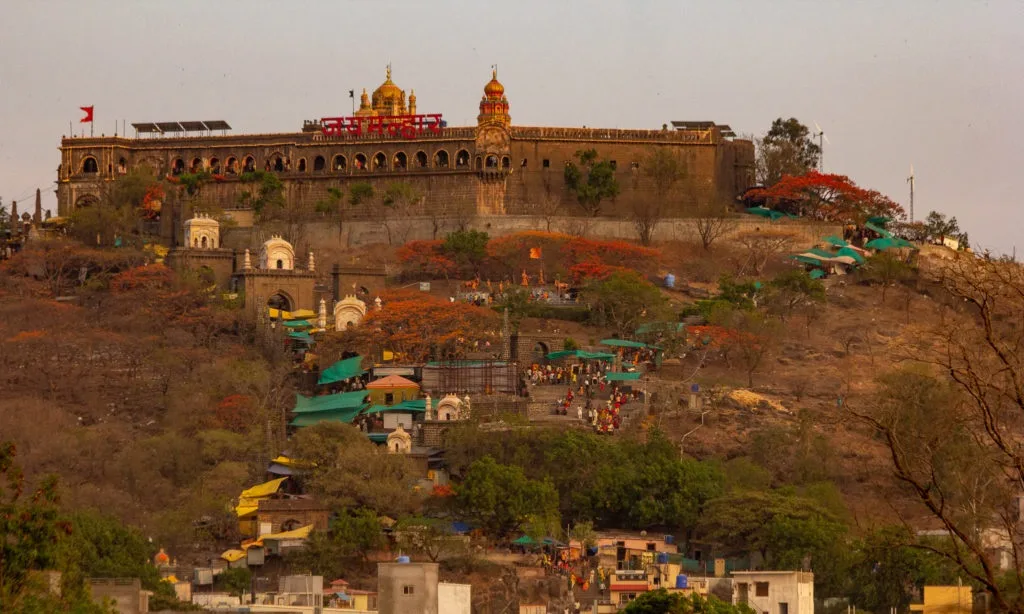
Celebration of Somvati Amavasya
Somvati Amavasya is a highly auspicious day marked by a Grand Traditional Procession :
The Procession : On this day, the sacred idols of Lord Khandoba, Malsa, and Banai are placed in an Ornate Palki (palanquin).
The Journey : Thousands of devotees accompany the Palki as it is carried from the main temple on the hill down toward the Karha River.
The Ritual : Upon reaching the river, the idols are given a ceremonial bath, followed by prayers and celebrations that draw devotees from all walks of life.
Our Childhood Memory Of Jejuri Temple
My Nana - Nani were from Baramati , just few days before Somvati Amavasya we use to go at their village and Nana use to know the accurate timings of the Palki Sohla (Procession) we all siblings you to go at Jejuri in the morning in Jeep full packed with all Devotees , as soon as we use to reach at foot of the Fort , the whole city was covered by Yellow Bhandara the Yellow Turmuric powder , we were given pack of Bhandara and mix dry cocount we use to mix it and throw it on Palki and shout Yelkot Yelkot Jai Malhar , Sadanadacha Yelkot , Khandoba cha Naavani Chaangbhala ,it use to very rush we use to rush inside the mob and touch the Palki to take blessings of our Diety.
Waghya Murli dance in the Mob
Waghya (Tiger) male dancer and Murli is female dance who is married to Khandoba means she has dedicated her life in service of Lord Khanderaya, so Waghya - Murli dance was like the main atttaction on that day , it was full of energy and ancient local songs and Povada full of Josh in the golden city.
Holy dip in the River Kar
The Palki use to come from Fort to foot near River Karha creating the whole atmosphere in Golden Color full of Energy and as there use to be Abhisekh of Diety all mob use to take dip in the river my nana use to say that the water of river gets charged with touch of Khanderaya.
Holy Bhandara from the Palki
We use to touch the Palki and collect the Bhandara from Palki and from the ground its considered as blessed Bhandara which we use it whole year as blessing by applying it on our forehead and share it with our reltives and friends.
From Where to Buy Organic Bhandara in Jejuri
To buy organic, chemical-free bhandara (pure turmeric powder) in Jejuri, you should look for local wholesalers, certified spice manufacturers, or verified grocery stores located in the town.
Avoid buying loose, unbranded packets from aggressive vendors directly on the temple stairs where adulteration is a risk.
Top Local Places to Buy Organic Bhandara - Pure Turmeric in Jejuri
Nilam Industries :
Located at Gate No 19A/18A, Jejuri MIDC, near Palkhi Maidan.
They are established, large-scale manufacturers of agricultural and spice products in Jejuri, making them a highly reliable source for bulk, authentic turmeric.
Maharaja Masale And Dry Fruits :
Tucked away behind the Suvarnayug Bank in the Harapale Building.
This specialty store deals explicitly in high-quality spices and dry fruits at wholesale rates, which is safer than typical roadside souvenir shops.
Mayuresh Super Market :
Situated in Patharpur Vidyanagar, Jejuri.A well-stocked local super market that sources packaged, hygienic, and authentic puja materials alongside routine groceries.
Check for Texture & Aroma :
Pure bhandara has a deep golden-yellow color and a distinct, sharp earthy aroma.
Adulterated powder mixed with starch feels overly smooth or chalky and lacks the characteristic strong smell.
Say No to Forced Bundles :
If a shopkeeper near the temple steps insists you must buy a "complete puja plate" from them to gain entry, walk away.
Per the recent police mandate, you are entirely free to buy your bhandara from any store of your choice.
Temples in Maharastra where Somavati Amavasya is Celebrated
Shri Khandoba Temple (Jejuri, Pune) : Famous for its spectacular "Bhandara" (turmeric) festival, this is the most widely recognized celebration for Somvati Amavasya in the state.
Thousands gather as the temple grounds and devotees turn completely yellow with turmeric.
The 250-year-old tradition involves carrying the Lord's palki to the nearby Karha River for a holy bath.
Vitthala and Rukmini Temple (Pandharpur, Solapur) : Located on the banks of the Chandrabhaga River, devotees flock here to perform snan (holy baths) and offer prayers.
Dakshina Kashi Shiva Temple (Sangam Mahuli, Satara) : Situated where the Krishna and Venna rivers converge, it is a highly auspicious spot for bathing and Shiva worship during this period.
Shri Mayureshwar Ganapati Temple (Morgaon, Pune) : One of the prominent Ashtavinayak shrines, this temple witnesses a heavy influx of pilgrims doing the traditional pradakshina and offering prayers.
Somjai Devi Mandir (Shrivardhan, Raigad) : Known for its peaceful significance and ancient wooden architecture, it is a focal point for the local communities and visiting pilgrims on this day.
Trimbakeshwar Shiva Temple (Nashik) : Pilgrims regularly gather at the Kushavarta Kund to bathe and worship one of the 12 Jyotirlingas, as this day is especially beneficial for ancestral rites.
Here are the frequently asked questions (FAQs) regarding Somavati Amavasya :
1. What is the significance of Somavati Amavasya ?
Somavati Amavasya is believed to be a day of immense spiritual power. According to Hindu mythology, it is a day to seek blessings from ancestors (Pitrus) and Lord Shiva.
It is particularly significant for married women, who observe fasts for the longevity and prosperity of their husbands.
2. Why is it considered so auspicious ?
In Vedic astrology, Monday is governed by the Moon (Chandra), and Amavasya is the day of the New Moon.
When these two coincide, it creates a unique cosmic alignment that is believed to wash away sins, appease ancestors, and bring peace and prosperity to the family.
3. What rituals are performed on this day ?
Holy Bath : Many devotees take a dip in holy rivers like the Ganges, Yamuna, or Narmada.
Peeepal Tree Worship: It is customary to perform Parikrama (circumambulation) 108 times around a Peepal tree, tying a sacred thread (sut) around its trunk.
Fasting : Many devotees observe a Vrat (fast) throughout the day.
Charity (Daan) : Giving food, clothes, or money to the needy is considered highly meritorious on this day.
Tarpan: Offering water and prayers to ancestors to seek their blessings.
4. Is there a specific importance for married women ?
Yes. Married women observe the Somavati Amavasya Vrat to pray for the long life, health, and success of their husbands. It is often compared to the significance of Karwa Chauth or Vat Purnima in terms of dedication to the spouse.
5. What is the significance of the Peepal tree ritual ?
The Peepal tree is believed to be the dwelling place of the Trinity (Brahma, Vishnu, and Mahesh). Offering water and circumambulating the tree is believed to please all three deities, eliminate Pitru Dosha (ancestral curses), and bring stability to life.
6. What should one eat (or not eat) during the fast ?
The rules vary by tradition, but generally: Those observing a strict fast avoid solid food for the entire day. Those observing a partial fast might consume Satvik food (fruits, milk, or light vegetarian meals without onions or garlic) once during the day.
7. What is 'Pitru Tarpan' and why is it done ?
Pitru Tarpan is the ritual of offering water mixed with black sesame seeds to one’s ancestors. It is believed that on Amavasya, the ancestors visit their descendants to receive offerings. This ritual is performed to express gratitude and help the souls of ancestors attain peace (Moksha).
8. Is Somavati Amavasya celebrated every month ?
No. A "Somavati Amavasya" occurs only when the Amavasya tithi falls on a Monday. It occurs only once or twice a year, making it a rare and special occasion.
9. Can anyone perform these rituals ?
Yes, anyone can perform the rituals. While the fast is traditionally observed by married women, the acts of taking a holy bath, performing charity, and offering prayers to ancestors can be performed by any individual, regardless of gender or marital status, to seek spiritual growth and peace.
10. What are the common items needed for puja ?
Usually, people keep water, fresh flowers, incense sticks, vermillion (kumkum), sandalwood paste, raw milk, honey, and sweets. If performing the Peepal tree ritual, a sacred cotton thread (sut) is also required for the circumambulation.