Vat Purnima 29 June 2026 , Monday : The Ultimate Guide to Rituals, Significance, and Auspicious Timings
In the fabric of Indian tradition, festivals are more than just calendar dates; they are threads that weave together the tapestry of family, devotion, and nature. Among these, Vat Purnima stands out as a profound celebration of love, resilience, and the sacred bond between husband and wife. As we look ahead to 2026, many women are already preparing their hearts and homes for this auspicious Vrat (fast).
.webp)
Whether you are observing this fast for the first time or carrying forward a cherished family legacy, understanding the timings and the spiritual essence of the day is key. Here is everything you need to know to observe Vat Purnima 2026 with grace and devotion.
What is Vat Purnima ?
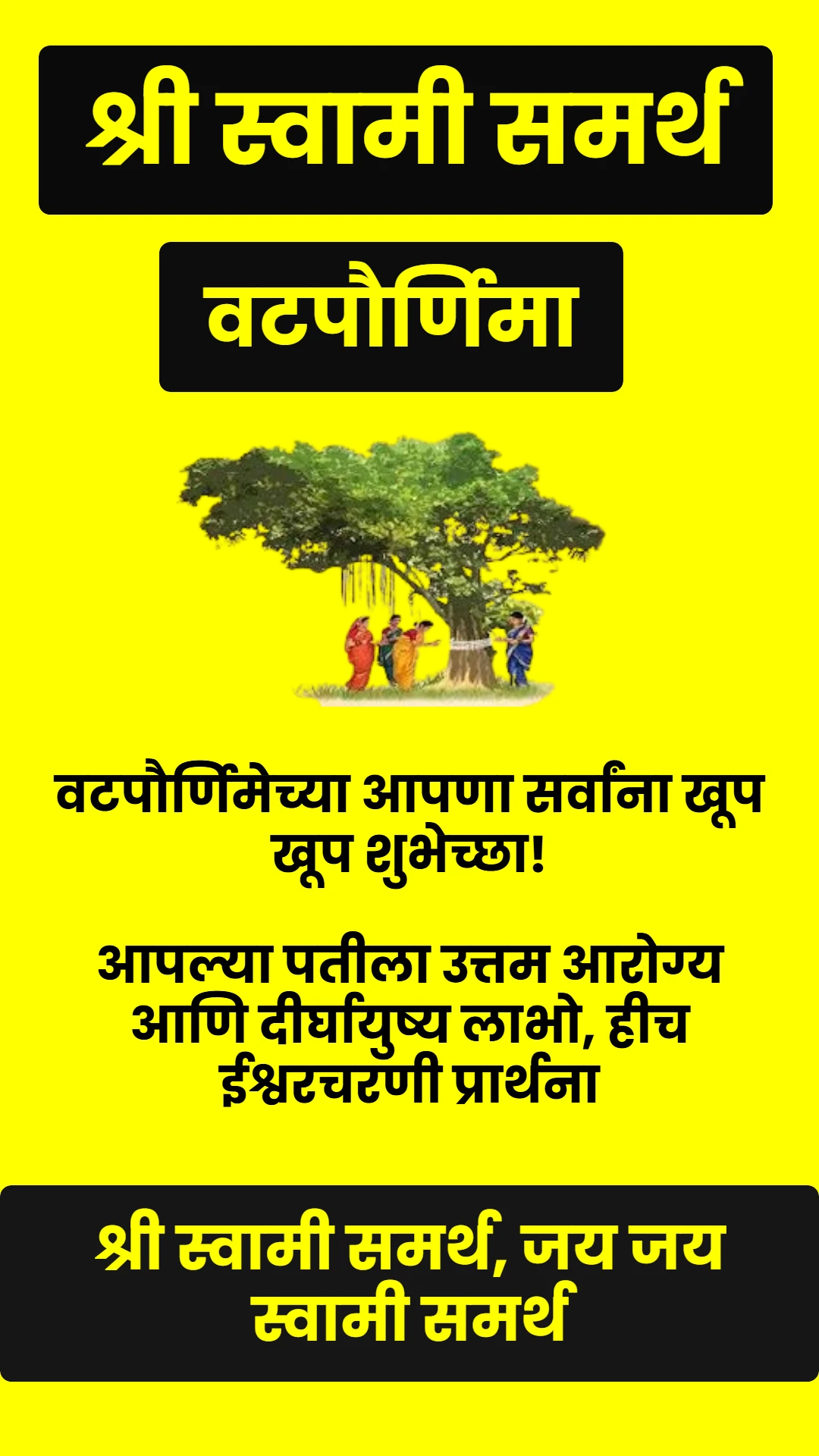
Vat Purnima, observed on the Purnima (full moon) day of the Jyeshtha month in the Hindu lunar calendar, is a day dedicated to the worship of the Banyan tree (Vat Vriksha).
Legend traces this festival back to the tale of Savitri and Satyavan. Savitri, a woman of immense devotion and intelligence, famously fought the God of Death, Yama, to win back the life of her husband, Satyavan. Because she performed her prayers and penance under the shade of a Banyan tree, the tree came to symbolize longevity, stability, and the triumph of life over death. Today, married women observe a strict fast on this day, praying for the long life, health, and prosperity of their spouses.
Vat Purnima 2026: The Auspicious Timings
Precision in timing is vital in Vedic astrology and ritual practice. To ensure your prayers are aligned with the cosmic energy of the day, take note of the following timings for Vat Purnima 2026 :
Start of Purnima Tithi : June 29, 2026, at 03:07 AM
End of Purnima Tithi : June 30, 2026, at 05:27 AM
Shubh Muhurat (Worship Time) : Abhijit Muhurta and Vijaya Muhurta on 29 June 2026 , Monday are very Auspious to Worship Banyan Tree for Long Healthy - Wealthy Life of Husband , Please check the Tool to get Accurate Muhurta Time as per your location.
Why the morning window ?
In Vedic traditions, the morning hours are considered Sattvic (pure).
Worshipping the Banyan tree during this time allows one to harness the fresh energy of the rising sun while maintaining the sanctity of the ritual.
It is recommended to complete your Parikrama (circumambulation) and offer your prayers before the heat of the afternoon sets in.
The Significance of the Banyan Tree
Why the Banyan tree ?
In Hinduism, the Banyan tree is considered the Akshaya Vat—the indestructible tree.
Its massive aerial roots symbolize the complex, nurturing, and enduring nature of a long-lasting marriage.
Scientifically and spiritually, the Banyan is seen as a source of immense oxygen and life force.
By worshipping the tree, women acknowledge the role of nature in sustaining life and seek the "indestructible" blessings of the tree for their households.
It is a beautiful intersection of environmental stewardship and spiritual devotion.
How is Vat Purnima Celebrated in Satara - Pune Side
In our Pune - Satara side Vat Purnima is called Vat Savitri Puja its the most sacred Purnima and all Women perform it with lot of faith.
It is celebrated in all over India and also in every part of Maharashtra but I have seen it Pune and Satara so I am narrating the experience about it.
Normally in every Village the Bayan Tree which is called as Vadacha Zaad and Vatavruksha this sacred tree is seen all around the Village but the main tree is situated in center of the village where there is the main market.
It is belif in all unmarried girls that if they help in cleaning ,decorting and helping the women who observe Vat Savitri Vrat get Good Healthy , Rich , Successful and Well settled Husband so these Girls clean the area around the Vatavruksha and this Purnima Occurs in June so many times its rainy season but still they decorate with rangoli and night before Vat Purnima all ladies put Mehandi on hands sing traditional marathi songs , its very Good scence.
How Vat Savitri Vrat is observed by married Women in Satara - Pune
Married Women are called as Savashin means Shuhagan so they observe strict fast (Upvas) from morning and in Abhijit Muhurta or Vijaya Muhurta they visit the Vatavruksha wearing Traditional Green color Navaari Saree and matching Green color Bangles and big red color Bhindi on forehead they look like Mahalaxmi.
Naivaidya offering to Vatavruksha
These women carry jackfruit flakes , berries , Mango pieces on leave of Banyan tree and cotton thread , they pray and tell Sankalp to Vatavruksha and offer Naivaidya and make 7 rounds around the Vatavruksha and same time tie the cotton thread and ask for Good Health of their Husband.
Then after sunset married women perform Dev Puja in home and take blessings from Elder and their husband and they eat Satvik Dinner and brek the Vrat.
Why is Vat Purnima most Sacred Festival in Satara and Pune side
In Satara and Pune side , Youth work in Army they serve the nation many of Satara - Pune youth is serves the Nation at cost of their life and to Protect them from the Evil Nations many of our married women Pray from their heart , they Pray to God to protect their Husband from all kind of attacks.
They pray so that every Vat Purnima they will particated and perform the Vat Savitri Puja with more and more enthusiasm , so much Trust they have in this Auspious Purnima.
Other reason is that many womes husband work in differnt part of India and other cities and to bless them with Good health they perform this Puja.
Preparing for the Vrat: A Step-by-Step Guide
1. Preparation (The Day Before)
Cleanse your home and prepare the Puja Thali. Traditionally, the thali includes:
Raw cotton yarn (white thread) for tying around the tree.
Vermilion (Sindoor) and Turmeric (Haldi).
Fresh fruits, flowers, and sweets.
Soaked chickpeas (often used as an offering).
A small water pot (Lota) for Arghya.
2. The Day of the Fast
On the morning of June 30, 2026, rise early and take a purifying bath.
Wear traditional attire—preferably a saree—and adorn yourself with the symbols of a married woman (Bindi, Mangalsutra, and Bangles).
3. The Worship Ritual
Reaching the Tree : Visit a Banyan tree in your vicinity.
If you cannot find one, you may worship a branch of the tree brought home, though visiting the tree is traditionally preferred.
The Offering : Place your offerings of fruits and sweets at the base of the tree.
The Thread Ceremony : This is the most crucial part.
Hold the raw cotton yarn and circumambulate the tree seven times.
With each round, wind the thread around the trunk of the Banyan tree.
This symbolizes the binding of your life to your partner's, seeking protection and longevity.
Prayer: After the seven rounds, bow before the tree, pray for the well-being of your husband, and pour water (Arghya) at the base of the tree.
Listening to the Story : Traditionally, women sit together to recite or listen to the story of Savitri and Satyavan. This reinforces the values of loyalty and courage.
Health and Mindfulness During the Fast
While the fast is a spiritual act, it is also a test of self-discipline.
Many women observe a Nirjala (waterless) fast, while others consume fruits or milk.
strong If your health does not permit a complete fast, opt for Phalahar (fruit-based diet).
The intent behind the fast is devotion, not physical suffering.
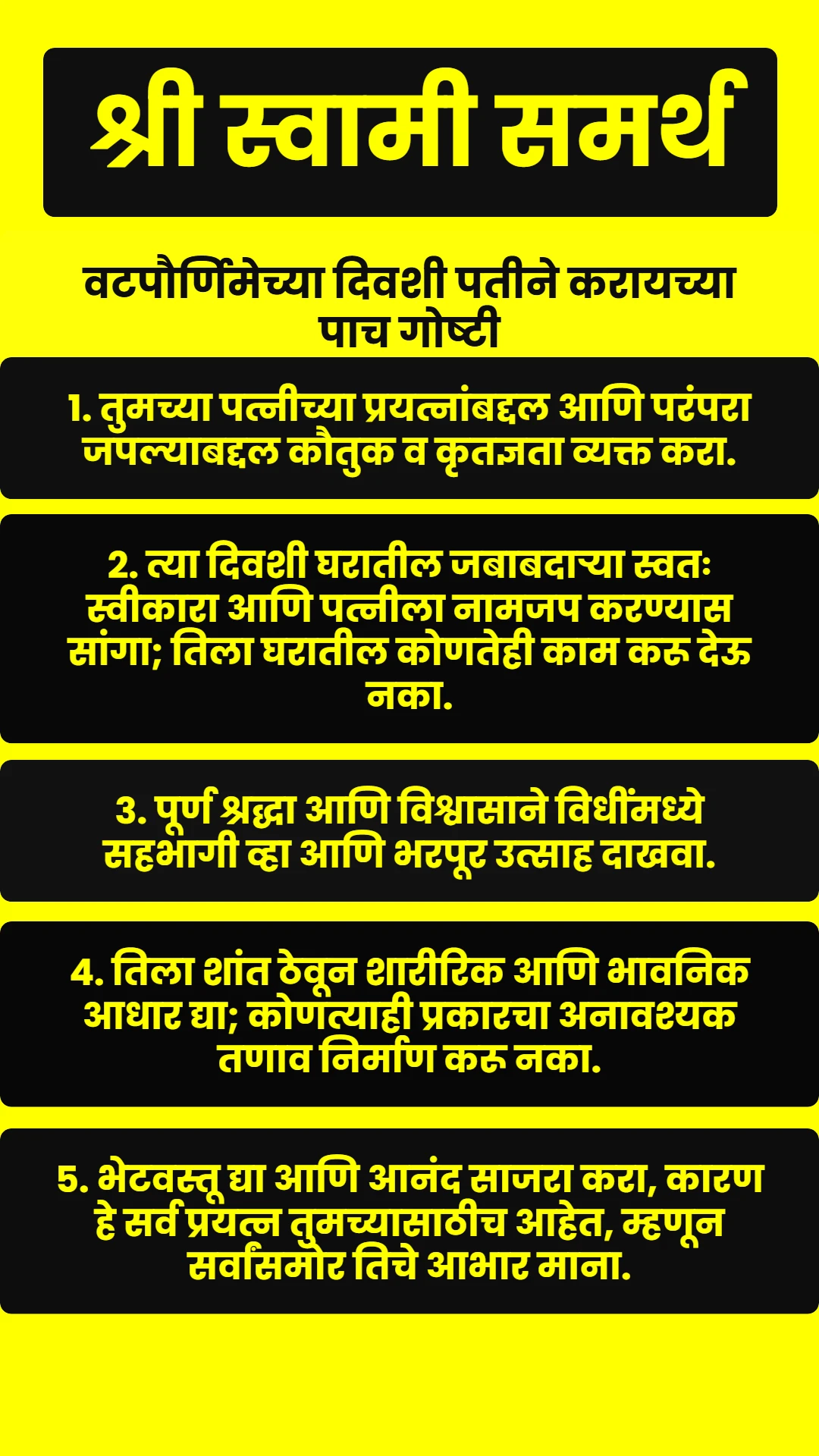
Practice Gratitude : Use the hours of fasting to reflect on your relationship.
Think of the moments of support, the challenges you have overcome together, and the future you are building.
This transforms the fast from a ritual into a meditative practice.
Vat Purnima in the Modern Age : A Balancing Act
In 2026, many women will be balancing demanding careers, household responsibilities, and children. You might wonder: Does the tradition still apply?
The answer is an emphatic yes. Traditions evolve, but their essence remains.
If you are working on the day of Vat Purnima 2026, you can perform a simplified version of the puja in the morning before work.
The devotion in your heart and the clarity of your intention hold more weight than the complexity of the ceremonial steps.
Even a few minutes spent in sincere prayer under a tree near your office or home is sufficient to invoke the blessings of the day.
Vat Purnima Auspicious Muhurat in 2026 to worship Banyan Tree
The most Aupicious Muhurat's in 2026 to tie white Cottan Thread are Abhijit Muhurat and Vijaya Muhurat , Now these Muhurta Timimgs are differnt as per the location as they depend upon the Sunrise time as both the muhurats are Divas Muhurta , We have made the Tool in which just enter the name of your city and it will display the correct time of Abhijit Muhurat and Vijaya Muhurat its very simple.
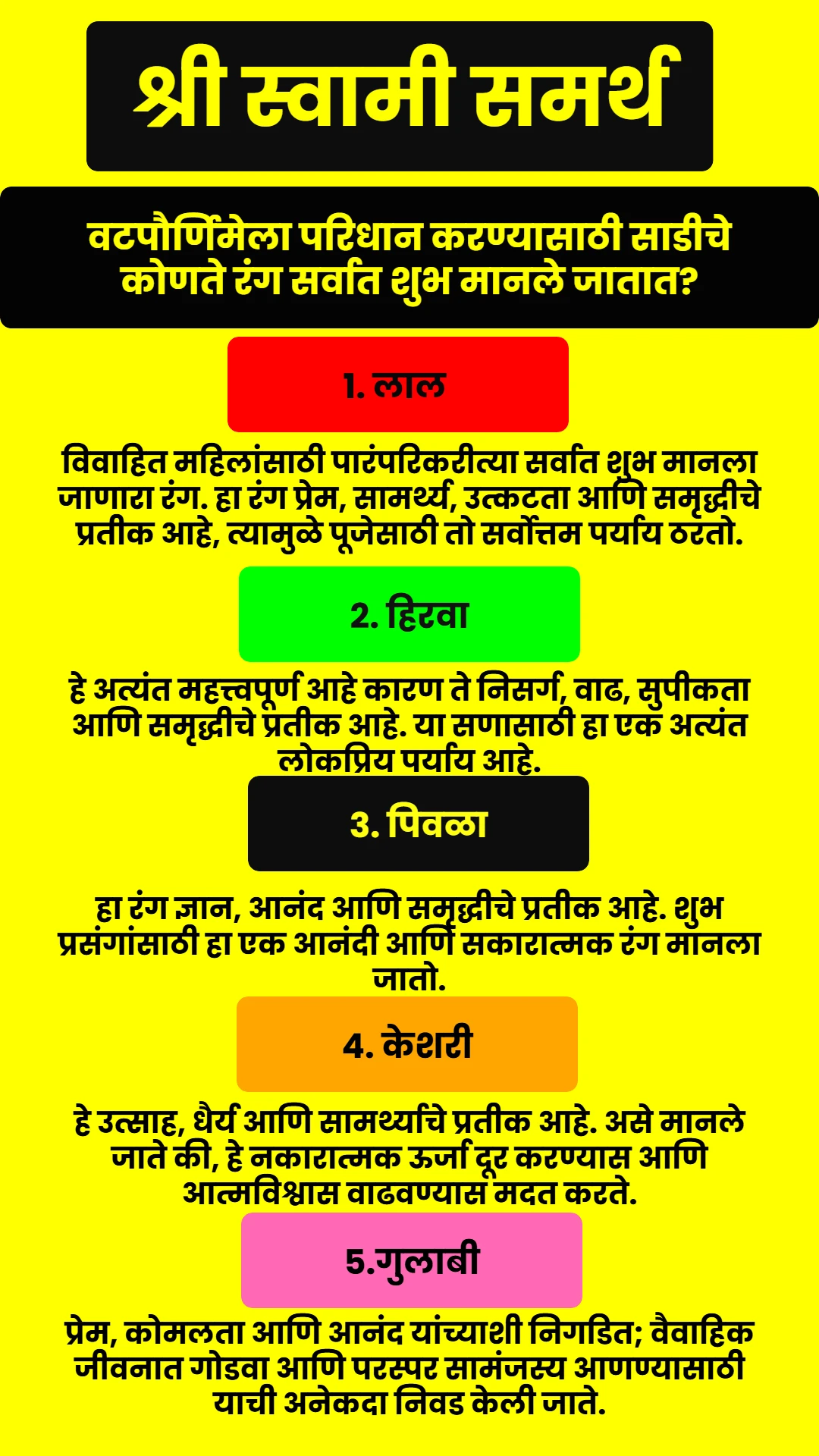
Which saree colors are very Auspicious to wear on Vat Purnima
Red : Traditionally considered the most auspicious color for married women. It symbolizes love, strength, passion, and prosperity, making it the top choice for the puja.
Green : Highly significant as it represents nature, growth, fertility, and prosperity. It is a very popular choice for this festival.
Yellow : Represents knowledge, happiness, and prosperity. It is considered a cheerful and positive color for auspicious occasions.
Orange : Symbolizes enthusiasm, courage, and strength. It is believed to help dispel negative energy and boost confidence.
Pink : Associated with love, softness, and joy, often chosen to bring sweetness and understanding into marital life.
Which Color must be Avoided on Vat Purnima
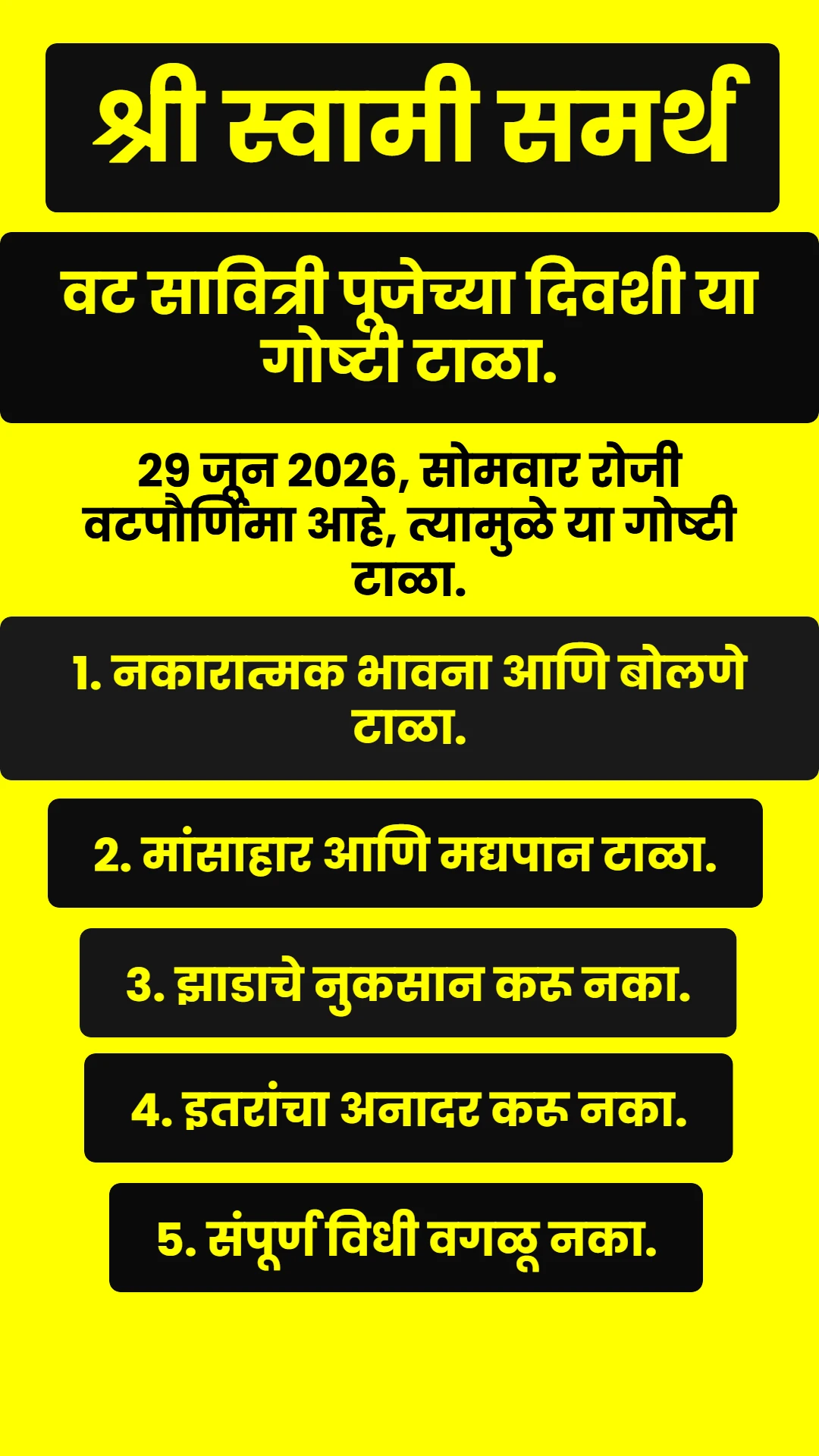
Black : This is the primary color to avoid.
In many Indian traditions, black is associated with mourning, negativity, and sorrow, making it inappropriate for a festival that celebrates longevity, prosperity, and the well-being of one's spouse.
Dark Blue/Grey : Similar to black, very dark or dull shades of blue and grey are often avoided.
These colors are frequently perceived as somber or lacking the vibrancy and auspicious energy required for a celebration focused on life and marital commitment.
White : While white is elegant, it is often associated with simplicity or mourning in certain cultural contexts within India.
Unless it is an off-white or cream fabric that is heavily embellished with gold or vibrant colors, it is generally preferred to choose brighter, more festive hues for this occasion.
When is Vat Purnima in 2026
29 June 2026 ,Monday is the Date of Vat Purnima , and to get information to worship Banyan Tree for long life of your husband click on this link -> Vat Purnima Muhurat , In this tool you will find 100% Correct time of Abhijit Muhurat and Vijaya Muhurat.
Common FAQs About Vat Purnima
Q: Can unmarried women observe Vat Purnima ?
A : Vat Purnima is specifically a festival for married women to pray for their husbands.
However, some traditions suggest that young women may observe it to seek the blessing of a suitable partner.
Q: What if I cannot find a Banyan tree ?
A : In urban areas, this can be difficult.
Many visit local temples where a Banyan tree is often planted in the courtyard.
If absolutely necessary, you may use a picture or a small branch of the tree, but the live tree is the traditional conduit for the ritual.
Q: Does the date change every year ?
A : Yes, being a lunar-based festival, the date shifts every year in the Gregorian calendar.
Always ensure you check the Purnima Tithi for the specific year, as we have provided above for 2026.
Conclusion : Embracing the Spirit of Longevity
As we anticipate Vat Purnima 2026, let us remember that the true strength of a marriage lies not just in external rituals, but in the internal commitment to stand by one another.
The Banyan tree is a silent witness to the passage of time—it grows slowly, spreads wide, and stands firm against the storms.
May your relationships emulate the nature of the Banyan: stable, nurturing, and ever-growing.
Mark your calendars for June 30, 2026, wake up with the sun, and step into the day with a heart full of gratitude and love.
May this Vat Purnima bring health, happiness, and unshakeable strength to your bond.
How to find Bayan Tree to worship on Vat Purnima
In India 100% you will find Banyan Tree Vatavruksha near Hanuman Temple , Swami Samarth Math ,Shiva Temple and Gram Devi Devta Mandit, in some Mandir they keep small tree in big drum depending on area.
If you are in Satara or Baramti or any part of Maharastra at start of the Village and End of Village ypu will find Banyan Tree and ther will be One Gram Devta of each Village and its Temple is always in center of Village in the Main Makert Area its called Bazar Peth.
So instead of searching for banyan tree near me for pooja search for Hanuman Temple near you will find Banyan Tree or your pooja.
Before Mumbai -Pune Expressway we use to use Khandala Ghat Old way to Pune in that Ghat there were many Banyan Trees , it was One tree than its Branches come from Up and goes in Ground and new Tree is formed this keeps repeating ,so from Pune to Baramati and till Satara almost every villages in India and in many parts of Mumbai had Bayan Tress now the extra ones are cut down till 2026 Mumbai Metro, Coastal Road , Samriddhi Express Highway have taken many of these trees.
when is Vatpornima ?
Vatpornima is on 29 June 2026 , Monday and Auspious Muhurta to worship Bayan Tree is between 2 Muhurta - Abhijit Muhurta and Vijaya Muhurta.
The time of these Muhurta changes as per the location so to know the accurate Muhurta time as per your location we have made the Tool which checks the Sunrise time of your location and then displays time of Abhijit Muhurta and Vijaya Muhurta.
Click on the link and get the 100% Correct location Time for Muhurta -> Vatpornima Correct Muhurta to worship Bayan Tree
How is Vat Purnima celebrated in Akkalkot , Swami Samarth Temple near Vatavruksha
Vat Purnima holds supreme significance at the Shri Vatvruksha Swami Samarth Maharaj Temple in Akkalkot because Shri Swami Samarth spent a significant portion of his life meditating under the sacred banyan tree (Vatavruksha) located in the temple courtyard.
The celebration unfolds through several specific traditions and events :
Sacred Tree Worship :
Thousands of married women (Suvasinis) throng the temple premises to worship the exact banyan tree associated with Swami Samarth.
Parikrama and Thread Tying :
Women tie a sacred thread around the banyan tree and perform seven circumambulations (Pradakshina) while praying for their husbands' longevity and prosperity.
Special Darshan and Pujas :
Devotees form long queues from early morning to seek blessings from the Swami Samarth idol and the Samadhi shrine.
Temple Decorations :
The temple complex and the banyan tree are beautifully adorned with flowers, traditional ornaments, and special lighting.
Traditional Offerings :
Women offer fruits, grains, and traditional prasad (such as Puran poli or Sheera poori) to the tree and the deity.
Vat Purnima Pooja Timings for 29 June 2026
Vat Purnima Pooja Timinigs are scheduled in Abhijit Muhurta and Vijaya Muhurta as these Muhurta depends upon the Sunrise Timings of the Location so we have made the Tool which gives Correct Timings for these Auspious Muhurta , so just click on this link and Enter your location -- Vat Purnima Pooja Timings
How to get Benefits from Vat Purnima Vrat for Unmarried Girls
Unmarried women can participate in Vat Purnima (or Vat Savitri) by observing the fast and performing the puja to seek an ideal husband. Instead of praying for a spouse's longevity, they pray for a virtuous life partner.
Matlab Kuvari Ladkiya khud ke liye accha Well Settled , Handsome , Strong , Healthy , Rich , Understanding Nature wala accha Pati paane ke liye ye Vrat karti hai.
How to Unmarried Girls Observe Vat Savitri Vrat
Sankalp :
The fast and rituals are performed to remove hurdles in marriage and to be blessed with a good, loving, and supportive husband.
Fasting to get Supportive Husband :
While married women observe a strict, full-day fast, unmarried girls usually perform the rituals without fasting or opt for a light phalahar (fruit-based) diet depending on family traditions.
The Puja :
The worship focuses on the banyan (Vat) tree, which symbolizes the trinity of Brahma, Vishnu, and Maheshwara.
Girls worship the tree by offering flowers, fruits, and a kalash (pot) of water.
Parikrama around Banyan Tree :
Like married women, unmarried girls wrap a white or yellow sacred cotton thread around the trunk of the banyan tree while circumambulating it seven times.
How to Do Vat Purnima (Vat Savitri Puja) when we do not have Banyan Tree in our Area
If you do not have a Banyan tree (Vat Vriksha) near your home, you can easily perform the Vat Purnima Puja at home using alternative methods.
The scriptures allow for these adjustments when a tree is unavailable.
Here is how you can perform the puja at home:
1. The Alternative Tree Methods
Choose one of the following options to represent the Banyan tree :
A Small Sapling : Purchase a small Banyan tree sapling in a pot from a nursery and place it in your temple area.
A Banyan Twig/Branch : Bring a small twig or branch of a Banyan tree, plant it inside a small pot filled with soil, and use it for the puja.
An Image or Drawing : Draw a picture of a Banyan tree on a piece of paper or a copper plate using sandalwood paste (chandan) or turmeric (haldi).
A Clay Idol : Shape a symbolic tree out of clean soil or clay.
2. Setting Up the Puja Altar
Clean a quiet corner or your home temple.
Place a wooden stool (Chowki) and cover it with a red or yellow cloth.
Place your symbolic Banyan tree (pot, twig, or drawing) on the stool.
Place the idols or pictures of Savitri, Satyavan, and Lord Yama next to the tree.
3. The Ritual Steps (Puja Vidhi)
Invocation : Light a ghee lamp (diya) and incense sticks.
Pray to Lord Ganesha first to remove all obstacles.
Offerings : Offer water, roli (vermilion), akshat (rice grains), flowers, and sweets to the symbolic Banyan tree and the deities.
The Sacred Thread (Parikrama Alternative) : Tie a raw cotton thread (Kacha Soot) or Kalava (holy red thread) around your symbolic tree pot, branch, or drawing.
Since you cannot physically walk around a large tree, rotate the thread or your puja thali around the symbol 7 or 11 times while praying for your husband's long life.
Special Foods : Offer soaked chickpeas (chana), jaggery (gur), and seasonal fruits like mangoes and jackfruit.
Katha Reading : Sit down quietly and read or listen to the Vat Savitri Vrat Katha (the story of Savitri and Satyavan).
Aarti : Conclude the puja by performing the Aarti of Goddess Savitri and Lord Vishnu.
Can Women do Vat Purnima Puja on their Periods
Yes, you can observe the fast and perform the Puja during your period, but there are traditional limitations on direct physical involvement.
You can keep the fast and do mental worship (manas puja), but you should avoid physically touching idols or performing the circumambulation (pradakshina) around the Banyan tree yourself.
Follow these traditional guidelines if you are menstruating during the festival :
Fasting : You can keep the fast (vrat) as usual.
Mental Worship : Perform your prayers mentally.
You can chant mantras and pray to Goddess Savitri and Lord Vishnu from a distance.
Delegating Physical Tasks : Have a family member, relative, or your husband perform the actual offerings (like tying the thread and watering the tree) on your behalf while you are present.
Listening to Katha : You can participate by listening to the Vrat Katha or reciting it mentally without physically touching the holy book.
What to Avoid : Do not touch the puja thali, do not touch the Banyan tree (Vat Vriksha), and do not participate in the physical circumambulation (pradakshina).
Vat Purnima Photos with Information